13 October 2026 · 8 min read
Sound Meditation for Beginners: Your First Session
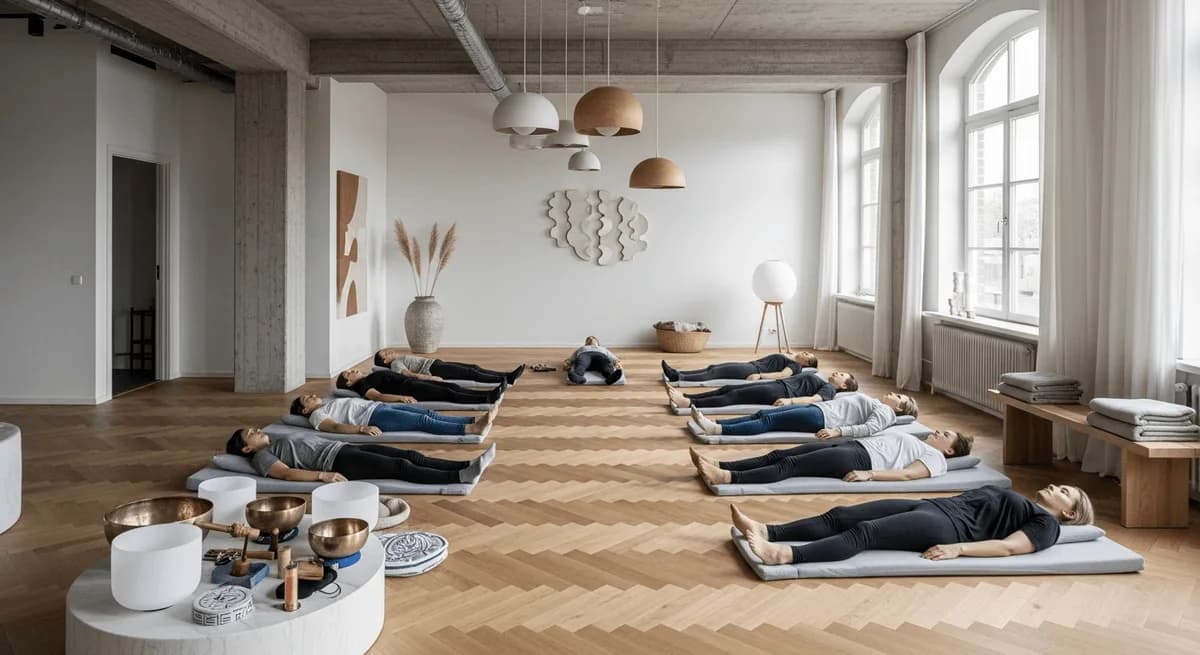
Discover what happens during a gong session, whether you need preparation, what to bring, and what to expect afterward. No meditation experience required.
Every time I have a preliminary conversation with an organizer or potential client, it turns out to be roughly the same thing: there's a task at hand, but it's unclear what to choose. A workshop: is that something about work, right? A gong: is that esotericism? Sound meditation: do you need training and prior experience? I decided to address the last question honestly, without expectations or promises.
Let me start with the main point: if you've never meditated before, that's not a reason to decline. I conduct individual and group sessions, and roughly half of the participants come without any experience. The gong and sounds work regardless of whether you already meditate or are just beginning.
Over six years of practice, I've seen that people come for different reasons: some are looking for a break from the hustle, some are simply curious, some heard from friends and want to understand what's actually happening there. I'll tell you what it looks like in practice.
What is a sound session and why people choose it
Sound meditation through gong differs from other practices in that you don't need to do anything. You don't need to breathe correctly, you don't need to close your eyes, you don't need to turn off your mind or achieve any particular state. You simply lie in a comfortable position and listen to the sounds.
Why do people choose sound sessions specifically? Everyone has their own answer. Some need a break from a stream of meetings and incoming messages. Others are looking for a way to step away from habitual thoughts. Still others simply want to experience something new. I conduct both individual and corporate sessions for teams, and I see that many note how against the backdrop of sounds they manage to distract themselves from work concerns, feel relaxed, notice changes in their breathing or sensations in their body. But this is subjective and manifests differently for everyone.
Sound meditation is neither esoteric nor therapy. It is a format in which you find yourself in a safe environment, listen to live sounds, and give yourself time to simply be. The session is designed so that you don't need any prior preparation, meditative experience, or any knowledge. All you need is the desire to lie down and set aside forty to sixty minutes of your time.
Do you need preparation and meditation experience
The main question people ask me: isn't this meditation, don't you need preparation? No. You don't need to meditate, you don't need to "breathe correctly," you don't need to close your eyes. Comfortable clothes and a willingness to lie down: that's all.
I often hear concerns: "I've never meditated," "I won't be able to concentrate," "I don't know how to do this." In fact, a sound session is designed to work without all these skills. You don't need to "do" it in the conventional sense. I'm not tasked with forcing myself to concentrate on anything. I simply lie down and listen.
During a session, some people notice that their state changes. Some feel calmer, some enjoy the physical sensations, some notice that their thoughts flow differently. But this happens on its own, without any effort on my part. No experience or technique is required for this.
The only thing that's really needed is consent to spend an hour or an hour and a half with the sounds. No pressure about results, no expectation that it should be one way rather than another. Each session will be unique because I come to it in a different state each time. That's completely normal. Meditation experience is not needed here at all.
How the first session goes: three stages
The first session is arranged to make you feel comfortable and at ease. We meet half an hour before the session begins; at this stage, I listen to what brought you here, what your expectations are, and whether there are any physical peculiarities I should know about. This helps me prepare the session specifically for you. The conversation can be brief or detailed, depending on what you need to share.
The second stage is the session itself. You lie down on a mat in a comfortable position, and I begin the sound experience. There are no instructions here about what to do; your only task is to lie and listen. The session lasts approximately 45–60 minutes. During it, there may be silence, there may be loud sounds, and the sounds come in waves. Many people notice that time passes quickly or becomes completely blurred. This is normal.
After the sound experience comes the third stage, integration. I ask you to lie for a bit longer, then slowly get up, we drink water, and discuss what you're feeling. Sometimes people need silence, sometimes they want to talk. Both options are perfectly fine. At this stage, I explain what might happen over the next few days after the session and provide my contact information for any questions.
What to bring and how to dress
Wear comfortable clothes. The kind you wear around the house. No ties, tight jeans, or jewelry that jingles and distracts. During the session you'll be lying on the floor or on a mat, so think about comfort rather than appearance. Many people come in sportswear or casual home clothes. Socks can help if you feel cold. If you have long hair, it might be useful to tie it up.
I'll prepare everything else. You don't need pillows, blankets, mats, or any special materials. The room where the session takes place already has everything you need. If you have an allergy to any scent or are sensitive to fragrances, let me know during the preparatory conversation. There may be a scent during the session, but it's optional and discussed beforehand.
Just bring a bottle of water with you. After the session, many people feel thirsty. Put your phone on silent mode, but to be honest: people usually forget about it completely.
If you're coming to a rented space, arrive without rushing. We'll start with a conversation, and the first twenty minutes will be spent figuring out what brought you here and what you expect. This isn't an empty formality. It helps me tailor the approach specifically to you.
After the session: what to expect during the week
After a session, many people feel relaxed and lightness. But this is not the end of the story. For seven days after the session, I remain available and will answer any questions that arise for you. Sometimes new sensations don't come immediately but manifest later. Someone notices they sleep better on the third day. Someone writes that they remembered something important during a walk. Someone simply feels different and can't explain why. This is normal.
In the first days after a session, it's helpful not to rush and not to overwhelm yourself with tasks. Drink water, move if you feel like it, or rest if you're drawn to it. Your body is processing what happened. You may notice unusual dreams, surfacing memories, changes in mood. This is a natural part of the integration process, not something to worry about.
If something bothers you or seems strange, write to me on Telegram. I'll explain, discuss it with you, help you make sense of it. Sometimes it's enough to simply hear from a specialist that this is normal. Support during the week is just as important as the session itself. This is the time when the real work happens.
Individual gong meditation and your first recording
An individual gong session lasts one and a half to two hours. I spend the first twenty to thirty minutes in conversation with the client, finding out what brings them in and whether there are any special considerations to pay attention to. Then comes the session itself, lasting approximately forty-five minutes to an hour. After that, there is time for integration, when we simply talk about how it went and what they felt. This is enough for many people. I don't require sessions to be repeated on a schedule; if someone felt good and senses they received what they came for, that's fine.
A session can take place in a rented studio in Moscow, or I can come to your home. After the session, I remain available for seven days: you can write a question or share how things are going. Sometimes people experience sensations some time later, and it's good to have someone who can explain this and provide support.
Booking and questions: write to me on Telegram @Aromara_ru. I will respond within a day. You can ask about pricing, details, and arrange a time.
Other articles
Have questions or want to discuss a format for your team?
Message on Telegram