10 March 2026 · 5 min read
Aroma diagnostics: what happens in a session and why it matters
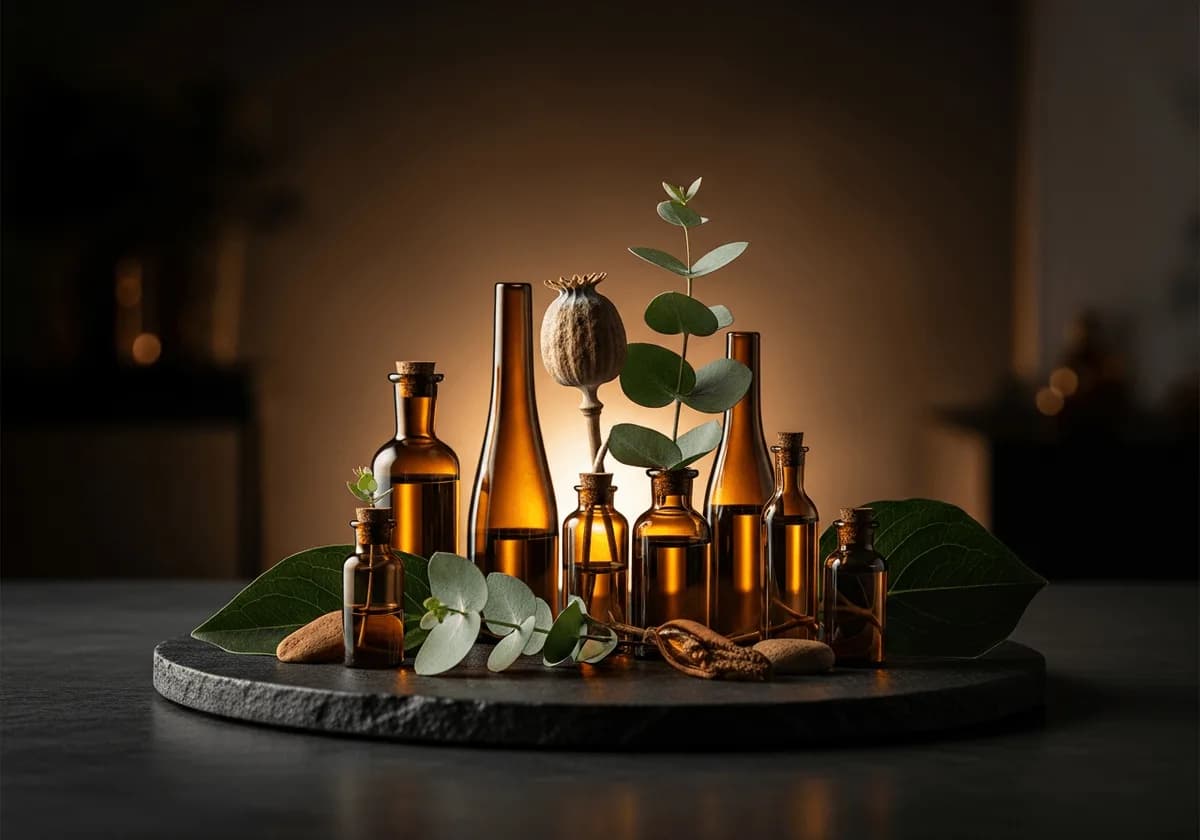
Many people assume aroma diagnostics is a fancy name for fortune-telling with scents. Here is what actually happens in a session and how it works without mysticism.
When I say 'aroma diagnostics', people often picture something esoteric: you smell an oil and someone tells you what is wrong with your life. That is not what this is.
Aroma diagnostics is work with responses. Not with scents as such, but with how a specific person reacts to specific aromas right now. Those reactions are informative — they help understand your current state.
How the session unfolds
We start with a short conversation: what is happening right now, what you have come with. You do not need to formulate a precise request — it is enough to give some context.
Then testing. Over thirty essential oils, one at a time. The task is simple: like it or not, wow or strongly not. No special vocabulary needed, no correct reaction exists.
I observe the responses: what generates a strong reaction, what repels, what surprises. This is not intuition or guesswork — it is careful observation of a specific person.
Based on the testing, I compose a personalised fragrance from the oils that drew the strongest positive response. We then go over the choices: why these particular oils, what they suggest about your state, and how to work with them.
Why reactions to aromas are informative
Smell is the only sense directly connected to the limbic system — the part of the brain responsible for emotion and memory. Aromas bypass the 'filter' of rational thinking in a way that words and images do not.
This means that a reaction to a scent is more honest than a verbal answer. A person might say everything is fine, but an aroma associated with calm and recovery triggers aversion — that is information too.
I do not make sweeping conclusions from this. But I can offer tools that will actually work for this particular person right now.
Who it suits and who it does not
It suits those who want to understand their state through sensory experience. Those who are tired and cannot explain why. Those looking for something concrete to support their resource in everyday life.
No meditation experience, knowledge of aromatherapy, or interest in fragrance as such is required. All that is needed is willingness to honestly note your reactions.
It does not suit those looking for psychotherapy or medical help. Aroma diagnostics is not therapy and not diagnosis in the medical sense. It is a practical tool for self-observation.
What you take away
A bottle of the personal fragrance composed during the session. An understanding of which aromas help you and how to use them. A brief written summary of the session — so you do not forget.
Many people come back a few months later: life changes, state changes, and what you need from a scent changes too. That is normal — aroma diagnostics is not a one-off event.
Other articles
Have questions or want to discuss a format for your team?
Message on Telegram